Every Word Will Be Attacked: What Founders Need to Know About Patent Language
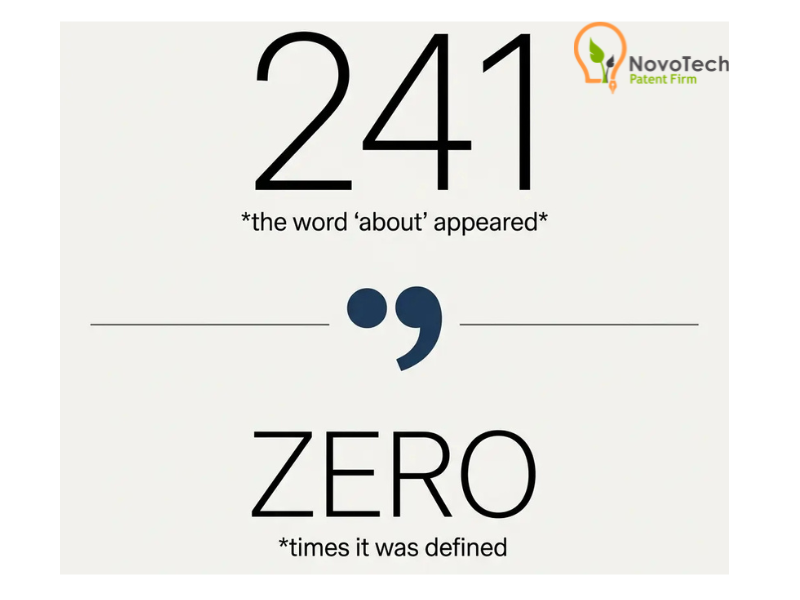
Authored by Babak Akhlaghi on June 3, 2026. A single word appeared 241 times in Enviro Tech’s patent specification. The word was “about.” Not once was it defined.
In May 2026, the Federal Circuit invalidated all 27 asserted claims. Complete annihilation. Not because the invention was obvious. Not because prior art anticipated it. Because nobody could say with reasonable certainty what “about” meant.
If you’re a founder with a patent application in front of you right now, this case is your roadmap. Not of what to do. Of what happens when you don’t.
The Case: How “About” Became a Weapon
Enviro Tech Chemical Services owned a patent on poultry processing. The invention increased chicken weight using peracetic acid at a specific pH range: “about 7.6 to about 10.”
That word—about—felt intuitive. Any engineer reading it would probably nod along. The problem is that patents don’t get read by nodding engineers. They get read by opposing counsel looking for weapons.
Safe Food found one.
They argued the term “about” was indefinite. The specification never explained what it meant. How much below 7.6? How much above 10? The claims didn’t say. The specification didn’t say. And during prosecution, when Enviro Tech had multiple chances to clarify, they stayed silent.
The district court agreed. The Federal Circuit upheld. Every single asserted claim was invalidated.
The 5.8 Million Chicken Experiment That Backfired
Here’s where it gets instructive. Enviro Tech’s specification wasn’t empty. They had real data. Real experiments. Examples showing pH tolerances of about 0.3 units in most cases.
But then there was the big one. The experiment involving 5.8 million chickens at a major U.S. poultry processor. That one showed deviations up to 0.5 pH units.
More data made it worse, not better.
The inconsistency across examples became ammunition. Safe Food pointed to the conflicting guidance and said: “See? Even the patent owner doesn’t know what ‘about’ means.”
The court looked at the intrinsic record—the specification and claims. Deficient. They looked at the extrinsic record—the prosecution history. Also deficient. No clear definition anywhere.
Indefiniteness isn’t about bad science. It’s about unclear boundaries.
The Prosecution History Trap
During prosecution, Enviro Tech amended their claims to overcome prior art. They narrowed the pH range from “7.3 to about 10” to “about 7.6 to about 10.”
But in their remarks distinguishing the prior art, they never mentioned the word “about.” They simply said the prior art didn’t show the lower range of 7.6. No explanation of what “about” meant. No assertion about boundaries.
That silence became fatal twice.
First, it reinforced the indefiniteness argument. If the patent owner couldn’t explain what “about” meant when it mattered most, how could anyone else?
Second, it triggered prosecution history estoppel. The amendment narrowed the claim. The lack of explanation meant Enviro Tech couldn’t later argue doctrine of equivalents to reclaim what they’d surrendered.
They drew a line without saying what the line meant. The court held them to the silence.
The Mindset Shift: You’re Not Writing for the Examiner
Here’s the trap most founders fall into. You treat patent drafting like you’re writing for the patent examiner. You want claims broad enough to get through. You trust your attorney to handle the details.
That instinct will cost you.
You’re not writing for the examiner. You’re writing for the opposing attorney who will read every word looking for a weapon.
The examiner wants to understand your invention. Opposing counsel wants to kill your patent. Those are different audiences. Different standards. Different stakes.
The Words That Will Kill You
Look at your claims section right now. Scan for these terms:
- “About”
- “Approximately”
- “Substantially”
- “Fast”
- “High-quality”
- Any other relative or qualitative term
Every one of those words is an indefiniteness pothole waiting to swallow your patent.
Terms of degree aren’t automatically fatal. But they require specification support. You need to define them numerically or by example. And those examples need to be consistent.
Enviro Tech used “about” 241 times. Never defined it once. The inconsistency in their experimental data handed Safe Food the case on a platter.
You can’t fix vague terms in litigation. You fix them in drafting.
What Founders Should Actually Do
If you’re working with a patent attorney right now, here’s your checklist:
1. Read the claims section like a contract.
Don’t skim it. Don’t trust that your attorney got it right. Read every word. If you don’t understand a term, ask. If it feels vague, it probably is.
2. Flag every relative term.
Circle “about,” “approximately,” “substantially,” and anything similar. Then ask your attorney: “What does this word mean in court? What is the boundary?”
If they can’t answer clearly, the specification probably can’t either.
3. Demand examples in the specification.
Relative terms need concrete support. Not just one example. Multiple examples. And those examples need to be consistent.
If your invention works at pH 7.6 ± 0.3, say that. Don’t leave it to interpretation.
4. Review prosecution remarks before they’re filed.
When your attorney amends claims or distinguishes prior art, read the remarks. Make sure they’re defining terms, not dodging them.
Silence during prosecution becomes evidence of indefiniteness later.
5. Use continuations as a second chance.
If you have issued patents with vague terms, pending continuations are your lifeline. You can’t fix the issued patent. But you can fix the record in the continuation.
Take a hard look at those claim terms. If they’re susceptible to indefiniteness challenges, define them now. Remove them if you can’t. Clarify the specification if it’s deficient.
Don’t wait for opposing counsel to find the hole.
The Prior Art Kill Zone
Here’s a detail that matters. A prior art reference with a pH of 7.0 fell squarely within the area of alleged ambiguity in Enviro Tech’s claims.
The claim said “about 7.6.” Without clear boundaries, that potentially overlapped with prior art at 7.0. The court called this an “important determinant” in their decision.
Vague terms don’t just create indefiniteness problems. They create prior art problems. If you can’t define your boundaries, you can’t distinguish what came before.
That’s how you lose on two fronts.
The Continuation Lifeline
Patent applications take an average of 26 months from filing to disposition. You go through multiple rejection-response cycles. Multiple opportunities to fix indefiniteness issues before the patent issues.
If you already have issued patents, your pending continuations are your second bite at the apple.
Go back and audit them. Look for relative terms. Check if the specification defines them. Review prosecution history for consistency.
This isn’t paranoia. This is defensive drafting.
Because the opposing counsel is coming. They’re reading your patent right now. And they’re looking for the word that kills everything.
The Takeaway: Draft Defensively, Not Optimistically
Patent practitioners live with a tension. You want broad claims. Broad claims mean broad protection. But reaching for breadth without precision is how you hand the other side an indefiniteness argument.
Enviro Tech wanted “about” to keep their claims flexible. It killed the patent instead.
You don’t need a crystal ball to avoid this. You need to ask better questions during drafting. You need to define terms before they become weapons. You need to treat every relative term like it will be challenged in court.
Because it will.
The claims section isn’t fine print. It’s the entire game.
Read it. Question it. Demand clarity. And if your attorney can’t tell you what “about” means with reasonable certainty, the court won’t either.
We don’t have a crystal ball. But this case is as close to a roadmap as you’re going to get.