Enanta Was First to File. Pfizer Still Won. The Difference Was One Digit.
Authored by Babak Akhlaghi on July 20, 2026. On June 23, 2026, the Federal Circuit affirmed that every claim of Enanta Pharmaceuticals’ patent on a coronavirus protease inhibitor is invalid. Enanta Pharmaceuticals, Inc. v. Pfizer Inc., Case No. 25-1427 (Fed. Cir. June 23, 2026) (Lourie, Bryson, Chen, JJ.)
The prior art that killed the patent was Pfizer’s own public presentation of nirmatrelvir, the active ingredient in Paxlovid. The same product Enanta was suing over.
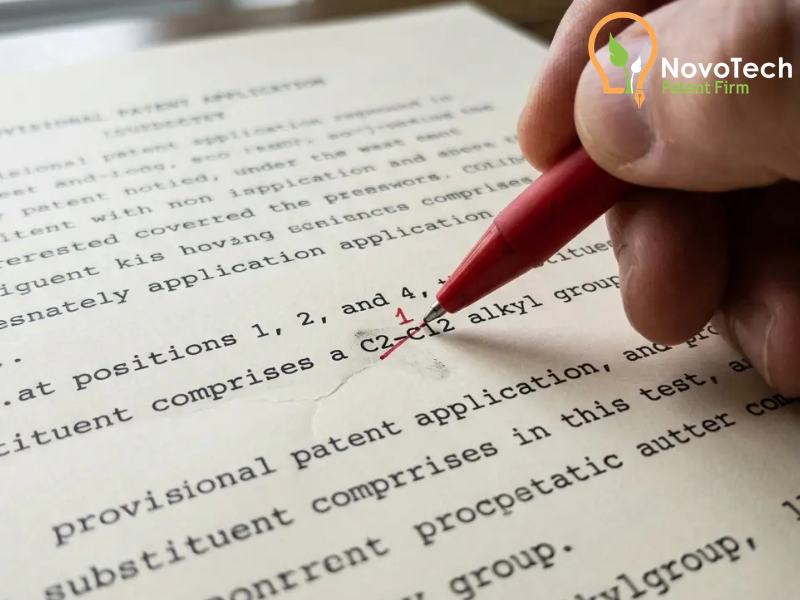
Here is the part that should keep every founder up at night: Enanta filed its provisional application before Pfizer disclosed anything. Enanta was first. And a single character in that provisional, a “2” where a “1” belonged, erased the advantage entirely.
I read this decision as a practitioner who works with startups every week. The lesson is blunt.
A cheap provisional will be expensive later.
What Actually Happened
Enanta filed a provisional application on July 20, 2020, covering compounds that inhibit coronavirus replication. The provisional defined a list of chemical substituents, and one of them read C2-C12 alkyl. That means alkyl groups with two to twelve carbon atoms.
On April 6, 2021, Pfizer publicly presented nirmatrelvir. That compound uses a one-carbon alkyl group in the relevant position. A C1.
Enanta says it discovered the problem on July 9, 2021, more than three months after Pfizer’s disclosure. Ten days later, Enanta filed a non-provisional application that changed C2 to C1. The patent issued with that change, and Enanta sued Pfizer in June 2022.
Pfizer’s defense was simple. The provisional never described a C1 compound. So the patent cannot claim the provisional’s filing date. And without that date, Pfizer’s April 2021 presentation is prior art that anticipates every claim.
The district court agreed. The Federal Circuit affirmed.
The stakes were enormous. Paxlovid earned nearly $19 billion in 2022 alone. One digit stood between Enanta and a claim on a share of that.
The Reframe That Matters: This Was Never a Typo Case
Enanta argued the C2 was an obvious typographical error. Its expert pointed to a definitional passage earlier in the provisional where “C2-C12 alkyl” was described in words as containing “one to twelve” carbon atoms. An inconsistency, yes. Evidence that the whole document meant C1, according to Enanta, No.
The district court said the error was not obvious enough to correct. The Federal Circuit went further and reframed the entire question.
“Entitlement to a filing date extends only to that which is disclosed,” the court held, quoting Lockwood v. American Airlines. A C1 alkyl “was simply not disclosed” in the provisional.
This is a written description and not a typo issue. The provisional must show that the inventors possessed the invention on the day they filed. The document said C2 to C12 in the substituent that mattered. The court took the applicants at their word.
The court’s own analogy makes the point vividly. Disclosing a two-carbon compound and claiming it supports a one-carbon compound is like saying a disclosure of ethanol supports methanol. Ethanol is the alcohol people drink. Methanol is highly toxic. One carbon apart, entirely different substances.
The Painful Irony: Detail Worked Against Enanta
Enanta did not cut corners. The provisional was long, meticulous, and full of carefully defined moieties. The court noted that the specification listed dozens of specific substituents, presumably described with great care.
That thoroughness became evidence against the typo theory. When you describe everything with precision, a court finds it hard to believe one specific number was a slip.
The ambiguity Enanta relied on also backfired. Parts of the spec supported the C1 reading. Parts contradicted it. That mixed record proved the error was open to reasonable debate, which is exactly what makes an error uncorrectable under the case law.
⚠️ The partial support made things worse. If your specification points in two directions, courts treat that as debate, and debatable errors stay in the document.
Why This Should Alarm Every Founder in a Hot Market
We operate under a first-to-file system. Your filing date is treated as the date of your invention. Whoever files first with the USPTO wins the race.
In competitive domains, that race is measured in weeks. Coronavirus therapeutics in 2020. AI, blockchain, and robotics today. Multiple teams converge on the same solutions at the same time, and your competitor’s product launch can land at any moment.
Here is the mechanism that trapped Enanta, and it can trap you:
- Your provisional secures a date only for what it actually describes.
- A competitor’s public disclosure becomes prior art against anything your provisional missed.
- You discover the gap only when you see their product, and by then the fix comes too late.
Enanta filed months before Pfizer disclosed anything. Pfizer even synthesized nirmatrelvir after Enanta filed its provisional. Enanta still lost, because the one implementation that mattered sat outside the four corners of its own document.
Your provisional is your ceiling. It is never your floor.
The Right Way: A Story From My Own Practice
I once represented a startup preparing for an investor presentation. They wanted to walk into that room saying “patent pending.” Their budget could not support a full portfolio.
We did a strategy session. We identified the core aspect of the invention, the piece a competitor would need to copy. We built a strategic provisional around that core, drafted claims, reviewed everything with the inventors, and filed within budget.
They walked into the investor meeting protected and confident. That confidence was justified because the provisional captured what actually mattered.
What You Should Do Before You File
The USPTO holds provisionals to the same disclosure standard as full applications. Treat yours accordingly. Here is my working checklist for founders and practitioners.
1. Draft at least one claim in the provisional
This is uncommon practice. It should be standard. Writing even one independent claim forces you to sit down with the inventors and define the boundary of the invention before you file. You cannot verify written description support for a claim that does not exist yet.
Include one independent claim and several key dependent claims. That single discipline catches the C2 that should be a C1.
2. Have every inventor review and approve the filing
Slow down. Run multiple review passes. The practitioner reviews. Every inventor reviews. Every inventor reads the claims specifically and flags anything that looks off. In chemical and biotech filings, a single substituent can carry the entire commercial value of the patent.
3. Use AI as an auditor, never as a drafter
💡 Run the finished provisional through an AI tool with one job: flag inconsistencies. A definition that says “one to twelve” next to a formula that says C2-C12 is exactly the kind of mismatch a tired human eye skips and a machine catches instantly.
4. Watch your competitors continuously
Enanta noticed its error only after Pfizer’s product appeared. A competitor’s disclosure became the mirror that showed them what their own filing was missing. Monitor the landscape so you audit your filings against reality before an opponent does it for you.
The One Truth This Case Teaches
The consequences of a weak provisional compound quietly. The problem surfaces during fundraising, acquisition talks, or litigation, and by then your options have narrowed considerably.
So if you are a founder, if you are building something real, hear this from someone who reads these decisions for a living.
A provisional filed on a tight budget is fine. A provisional filed as a checkbox is a trap.
Develop a strategic provisional. Include claims. Review it line by line with your inventors. Audit it with AI before filing.
Enanta had the resources, the detail, and the head start. One digit cost them all of it. Your filing date sets the bar for what prior art can be used against you, and the document you file today decides whether that date holds.
File first. File accurately. Both, always.