One Word Killed the Patent: What the Federal Circuit’s Samsung Ruling Means for Founders
By Babak Akhlaghi on October 30, 2026. On October 1, 2026, the United States Court of Appeals for the Federal Circuit decided Satius Holding, LLC v. Samsung Electronics Co., Ltd. (Case No. 25-1446). The court invalidated U.S. Patent No. 6,711,385.
That patent had been granted by the USPTO. It had survived a formal re-examination. It had been in litigation since 2018. After all of that, the Federal Circuit struck it down because of a single word: “electric.”
The claim covered an apparatus for “transmitting electric or electromagnetic signals over air.” Both sides agreed that transmitting electric signals directly over the air is a scientific impossibility. Electric signals travel through a physical medium, like a wire. Wi-Fi reaches your laptop as an electromagnetic wave. The claim promised both, and the law held the patent owner to the full promise.
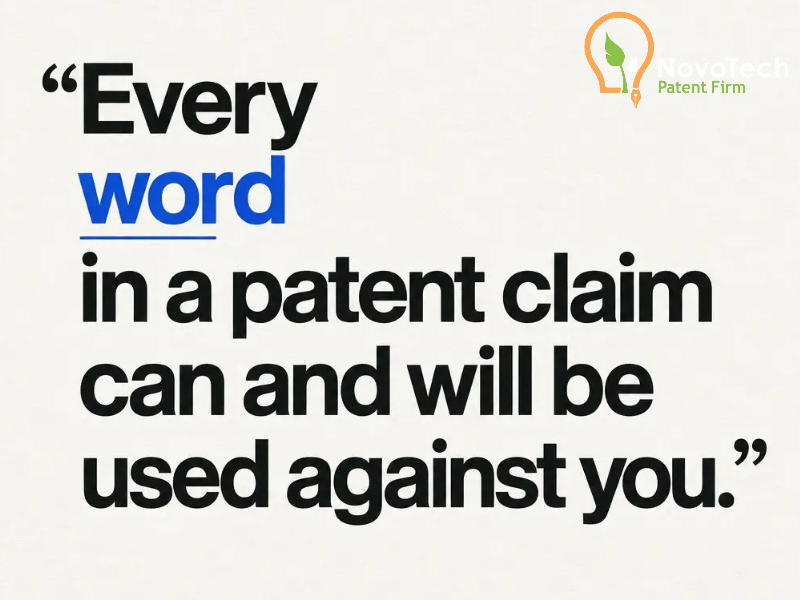
When IAM, the leading international patent publication, asked me to analyze the ruling, I summed it up this way: every word in the claim can and will be used against you. Here, one word, one word that was scientifically impossible to implement, resulted in the downfall of the patent.
If you are a founder who treats patent claims like fine print, this case is written for you.
What the Court Actually Decided, in Plain Language
The district court in Delaware invalidated the claims for indefiniteness, meaning the claim’s scope was supposedly unclear. The Federal Circuit reversed that part. The judges, led by Chief Judge Moore, held that the claim was perfectly clear. A skilled engineer reading it would understand exactly what it covered, including the impossible part.
Then the court invalidated the patent anyway, on a different ground: enablement.
Here is the distinction that matters for your portfolio:
- Definiteness (Section 112(b)) asks: is the scope of the claim clear?
- Enablement (Section 112(a)) asks: does the patent teach someone how to make and use the full scope of what is claimed?
Operability and clarity are two different standards. You can have a completely definite claim that is scientifically impossible to operate. A claim can be crystal clear and still be legally dead.
The twist makes it worse. The district court had flagged the enablement question, then set it aside as waived. The Federal Circuit reached the issue directly on appeal, because the facts were undisputed and the answer was a pure question of law. The court applied a principle from Amgen v. Sanofi: “the more one claims, the more one must enable.” No specification can teach someone how to do the impossible.
The Notice of Allowance Is a Checkpoint, Not a Finish Line
Here is what strikes me most about this case. The flaw sat in plain sight for over two decades. The examiner missed it. The re-examination missed it. The patent sailed through the patent office with the mistake in it. The system is run by human beings, and human beings make mistakes.
Prosecution is rigorous. Many applications receive at least one rejection, and plenty never reach allowance at all. After that grind, a notice of allowance feels like a victory lap. Founders frame the certificate and move on.
That is the trap. In my practice, the notice of allowance triggers two deliberate steps.
First, strategy set at filing. Before the application goes in, we identify the core claim strategy. Examination often begins years after filing. When a rejection forces an amendment, you need to remember what you were protecting in the first place, so every amendment serves that objective.
Second, a full claim review at allowance. This is one of your last chances to catch an error before the claims lock in. Check every word. Check every “or.” If the fix is minor, a Rule 312 amendment usually handles it without disturbing the allowance. If the fix is substantial, you file a request for continued examination and correct it properly.
In Satius, nobody used that window. The word stayed. Years later, it ended the patent.
What Investors Are Actually Evaluating
Patent pending status may have carried weight 20 years ago. Today, investors look beyond it. During due diligence, they examine whether your claims actually cover your core product, whether you ran prior art searches, whether you considered freedom to operate, and whether the claims could survive a challenge.
They’re investing in your thinking. Is it mature? Is it seasoned? Is it strategic?
A patent with a fatal flaw buried in the claims is worth nothing in a due diligence room. The Satius patent looked strong on paper right up until the moment it was tested. If your application is important, it will be tested, whether in litigation, licensing, or an investor’s data room.
That is why I advocate a strategy-first, file-second approach. A startup patent strategy starts with business objectives, decides which innovations belong in the patent bucket and which belong in trade secrets, and only then moves to drafting.
Broad Claims Carry Broad Risk
Founders want broad claims, and understandably so. The claim creates a virtual fence around your invention. Anything inside the fence infringes. A bigger fence means more potential infringers to pursue.
The practical reality: the broader the claim, the more susceptible it is to invalidation. The broader the fence, the easier it is to knock down.
For a startup, a strategically narrower claim that covers your core product and gets allowed, followed by a continuation application reaching for broader scope, sequences the risk intelligently. A pending continuation also discourages competitors from designing around your issued patent, because they can see you retain the ability to adjust your claims.
This Reaches Far Beyond Communications Technology
The technology in Satius was unique. The legal principle applies across every field. Definiteness and enablement know no borders. The ruling matters equally for AI, machine learning, medical devices, and software.
Pay special attention if your claims use alternative language. Any claim built on “A or B” requires both A and B to be fully enabled by your specification. If one alternative fails, the claim falls. AI and software claims, which tend to reach broadly across implementations, face heightened scrutiny on exactly this point.
In the Words of the Expert: My IAM Interview
When Nisha Shetty, Senior Reporter at IAM, interviewed me about the ruling, we focused on what it changes for drafters and challengers alike.
“The key issue in this case was whether a claim can cover an impossible scenario, a scientifically impossible embodiment, and nevertheless be definite. The court says yes.”
Challengers will now target enablement when they find impossible embodiments, since the definiteness route has narrowed. Litigators will also take note of how the court reached an issue the lower court never decided. For drafters, the takeaway is simpler.
“Quality is important. Quality is probably more important than quantity.”
What Founders Should Do Now
- Read your claims. The claims define the boundary of your invention. If a sentence confuses you, ask your patent attorney to explain it. Small typos like this do not show themselves early, and when they do, they are fatal.
- Audit every “or” in your issued patents and pending applications. Confirm your specification enables each alternative on both sides of that word.
- Build a review system. The application should pass through several filters: attorney review, inventor review, and AI tools that catch mistakes humans overlook. Draft it, put it aside, and read it again the next day with fresh eyes.
- Treat the notice of allowance as a review trigger. Use the window for a final claim check and a Rule 312 amendment if needed.
- Keep a continuation pending on your most important technology. It is your mechanism to fix errors and respond to design-arounds after issuance.
Frequently Asked Questions
What is the difference between definiteness and enablement?
Definiteness asks whether the scope of the claim is clear to a skilled person. Enablement asks whether the patent teaches that person to make and use everything the claim covers. The Satius claims passed the first test and failed the second.
How did a patent survive re-examination and still get invalidated?
Re-examination focuses on specific grounds raised against specific claims. The enablement flaw went unexamined until litigation put the full claim scope under the microscope.
What does “the notice of allowance is not the finish line” mean in practice?
It means allowance opens a final review window. You compare the allowed claims against your original strategy, verify every limitation is enabled, and file a Rule 312 amendment or an RCE to fix problems before the patent issues.
What should I do if I’m worried my existing patents have this kind of problem?
Request a claim audit focused on alternative language and enablement support. If a flaw exists and you hold a pending continuation, you can draft corrected claims there. If no continuation is pending, discuss reissue options with your patent attorney promptly.
How does this ruling affect AI and software patents?
Directly. AI and software claims frequently recite alternative implementations to maximize breadth. After Satius, each alternative must stand on its own enablement. Challengers will scan these claims for any embodiment the specification fails to teach.
What does “quality over quantity” actually mean for a startup with limited budget?
A few strategic applications far outweigh hundreds with no strategy behind them. Spend your budget on one carefully drafted application covering your core product, supported by a patentability search, rather than spreading the same money across rushed filings. A well-drafted provisional controls cost and buys you twelve months to fundraise. It is temporary in time, never temporary in importance.
How do I find a patent attorney for startups who thinks strategically, not just procedurally?
Ask candidates what happens at the notice of allowance stage. A procedural startup patent attorney says “we pay the issue fee.” A strategic patent lawyer for startups describes the claim review, the Rule 312 window, and the continuation decision. Ask about their IP strategy session before filing. The answer tells you which kind of counsel you are hiring.
Strategy First. Then File.
The Satius patent holder spent years and significant legal fees defending an asset that was broken on day one. A careful claim review at any checkpoint along the way changes that outcome.
In my practice, every engagement begins with a strategy session. We map your business objectives, identify your core innovations, and choose the right protection for each one. Then, we draft.